
“Turning data and evidence into action for more equitable communities.”
Quiesce.T builds decision-ready data, analytical tools, and applied research for housing affordability and preservation, climate and energy resilience, and urban policy.
National Rent Burden Impact Index V.1
Live Tool (Prototype)
The RBII V.1 National Live Prototype is an interactive decision-support tool developed by Quiesce.T to examine where rental affordability pressures are most concentrated across the United States. Using census-tract-level data, the prototype allows users to explore patterns of rent burden, severe rent burden, affected households and relative geographic priority through national and within-state perspectives. This prototype is currently under development and undergoing methodological, technical and data-quality review; its results should not yet be cited, reproduced or used as final research findings or as the sole basis for policy, funding or eligibility decisions.


EXPLORE RESEARCH
Quiesce.T assembles, cleans, links, validates, and documents data across properties, neighborhoods, municipalities, and national geographies. We turn fragmented administrative, housing, environmental, demographic, and market information into decision-ready data infrastructure, analytical tools, and applied research. Our work is designed to help institutions nationwide to identify where needs and risks are concentrated, understand why places or properties are being flagged, and determine where deeper assessment, investment, research, or policy attention may be warranted. The work is designed to support policymakers, public agencies, nonprofit organizations, researchers, and communities in making more transparent, targeted, and evidence-based decisions across the United States.









HOUSING CANNOT BE ADDRESSED IN ISOLATION
Housing stability is shaped by more than rent and housing supply. Transportation access affects whether residents can reach jobs, education, healthcare, and essential services. Climate hazards and extreme temperatures affect housing safety, household costs, displacement risk, and the long-term resilience of communities. Public infrastructure and investment decisions influence which neighborhoods receive resources and which communities remain vulnerable.
Quiesce.T studies these connected conditions to identify where pressures overlap, explain how they affect residents and communities, and develop evidence that can support more effective public decisions.
RESEARCH AREAS
HOUSING AFFORDABILITY AND STABILITY:
Examine rent burdens, housing instability, displacement pressures, housing conditions, and barriers to obtaining safe and affordable housing.
TRANSPORTATION ACCESS AND OPPORTUNITY:
Analyze how transportation access, travel conditions, and proximity to employment and essential services affect housing opportunity and community stability.
CLIMATE VULNERABILITY AND COMMUNITY RESILIENCE:
Evaluate how extreme heat, energy and utility burdens, environmental exposure, and climate-related risks interact with housing conditions and household vulnerability.
PUBLIC POLICY AND ANALYTICAL TOOLS:
We develop indices, maps, datasets, policy briefs, and decision-support resources that help translate complex evidence into practical information for policymakers, public agencies, researchers, nonprofit organizations, and communities.
OUR APPROACH
Translate complex data and policy evidence into accessible resources that can support informed public decisions. Our research is designed to help identify communities facing overlapping pressures and contribute to more equitable, locally responsive, and evidence-based housing solutions:
Original research reports and policy briefs
Maps, indices, datasets, and analytical tools
Practical policy recommendations
Publicly accessible educational resources
Housing challenges cannot be addressed by one field or institution alone. Quiesce.T seeks to exchange knowledge and develop public-interest collaborations with researchers, policymakers, public agencies, nonprofit organizations, housing practitioners, and communities:
Research and knowledge exchange
Institutional and community engagement
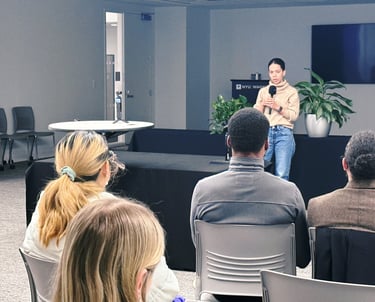
Public presentations and policy discussions
Cross-sector collaboration on housing challenges
Examine housing challenges using public data, policy research, geographic analysis, and community-level evidence. Our work considers how housing affordability interacts with transportation access, climate vulnerability, public infrastructure, and other conditions that affect community stability:
Housing affordability and rent-burden analysis
Transportation access and neighborhood opportunity
Climate vulnerability and household resilience
Public-data analysis, mapping, and policy research
RESEARCH AND ANALYZE
COLLABORATE
TRANSLATE AND APPLY